

A Thousand Years of Pilgrimage – Europe’s Sacred Routes
There are paths shaped by centuries of footsteps, stones worn smooth by the repetition of hope, and horizons endlessly sought anew. Pilgrimage in Europe is older than tourism and yet more relevant than ever a way to travel with attention, meaning, and an open heart. Our continent is interwoven with trails that connect not only cities, but also stories, beliefs, and traditions.
Santiago de Compostela – The Roads of Saint James (Spain)
Europe’s most famous pilgrimage route is without doubt the Camino de Santiago, leading pilgrims to the tomb of the Apostle James the Greater. The Camino Francés begins in the French border town of Saint-Jean-Pied-de-Port and crosses the Pyrenees into Spain. It runs through Pamplona, Burgos, and León, across the silent plains of the Meseta, to the green hills of Galicia, where mist and eucalyptus fill the air.
According to early accounts, the tomb was discovered in the 9th century after a shepherd saw mysterious lights above a field. It proved to be the resting place of the Apostle James the Greater, who, after his martyrdom in Jerusalem, was said to have been carried by his followers by boat to the Galician coast. For centuries, his grave lay hidden until the light of the Campus Stellae (the “field of the star”) revealed it once more. Around the tomb rose a cathedral, a city, and a road that came to cross an entire continent.
Today, pilgrims still follow that ancient path, not only to arrive, but to be on the path.
Other routes also lead to Santiago, such as the Camino Portugués from Lisbon or Porto, and the Camino del Norte along the rugged Atlantic coast.

Rome – Along the Via Francigena to the Heart of the Church (Italy)
The Via Francigena links Canterbury in England with Rome and is one of Europe’s oldest pilgrimage routes. It passes through France and Switzerland, over the Alps, along villages, monasteries, and Roman roads, all the way to the Eternal City.
In Rome, tradition holds that the Apostles Peter and Paul are buried. Both were executed during the persecutions under Emperor Nero — Peter by crucifixion on the Vatican Hill, Paul by beheading outside the city. The basilicas of Saint Peter and Saint Paul Outside the Walls later rose on these sites.
Those who walk the Via Francigena travel through the heart of European Christianity but also through landscapes rich in history and beauty, from Alpine passes to the Tuscan hills. Here, Rome is not just an endpoint but a convergence of centuries of faith, art, and culture.
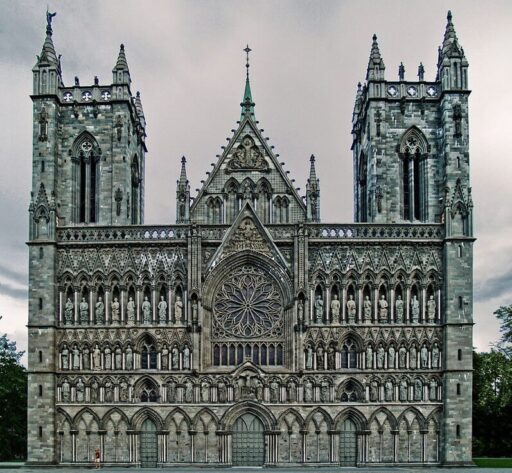
Trondheim – The Northern Way of St. Olaf
The St. Olavsleden is the most important pilgrimage route in Northern Europe. It connects the Swedish coastal town of Selånger with Trondheim in Norway, about 580 kilometres of forests, lakes, and fjords. The trail follows the journey of King Olaf II Haraldsson in 1030, as he returned from exile to reunite his kingdom.
Olaf had once been a Viking warrior who encountered Christianity abroad and was baptized. Back in Norway, he sought to unite his land under one faith, but his reforms and growing power led to conflict with local chieftains. He was killed at the Battle of Stiklestad. Shortly after his death, miracles were said to have occurred at his grave, and he was canonized the following year.
Above his resting place rose the magnificent Nidaros Cathedral, which remained Norway’s spiritual heart for centuries. Pilgrims came from far and wide to honour the “Holy King” — a symbol of conversion and reconciliation between the pagan and Christian North.
Those who walk the St. Olavsleden today follow the same path from struggle to peace: a route of silence and simplicity, where the power of the landscape is as tangible as the story of the man who brought faith to the North.
Canterbury – The Road to Thomas Becket (England)
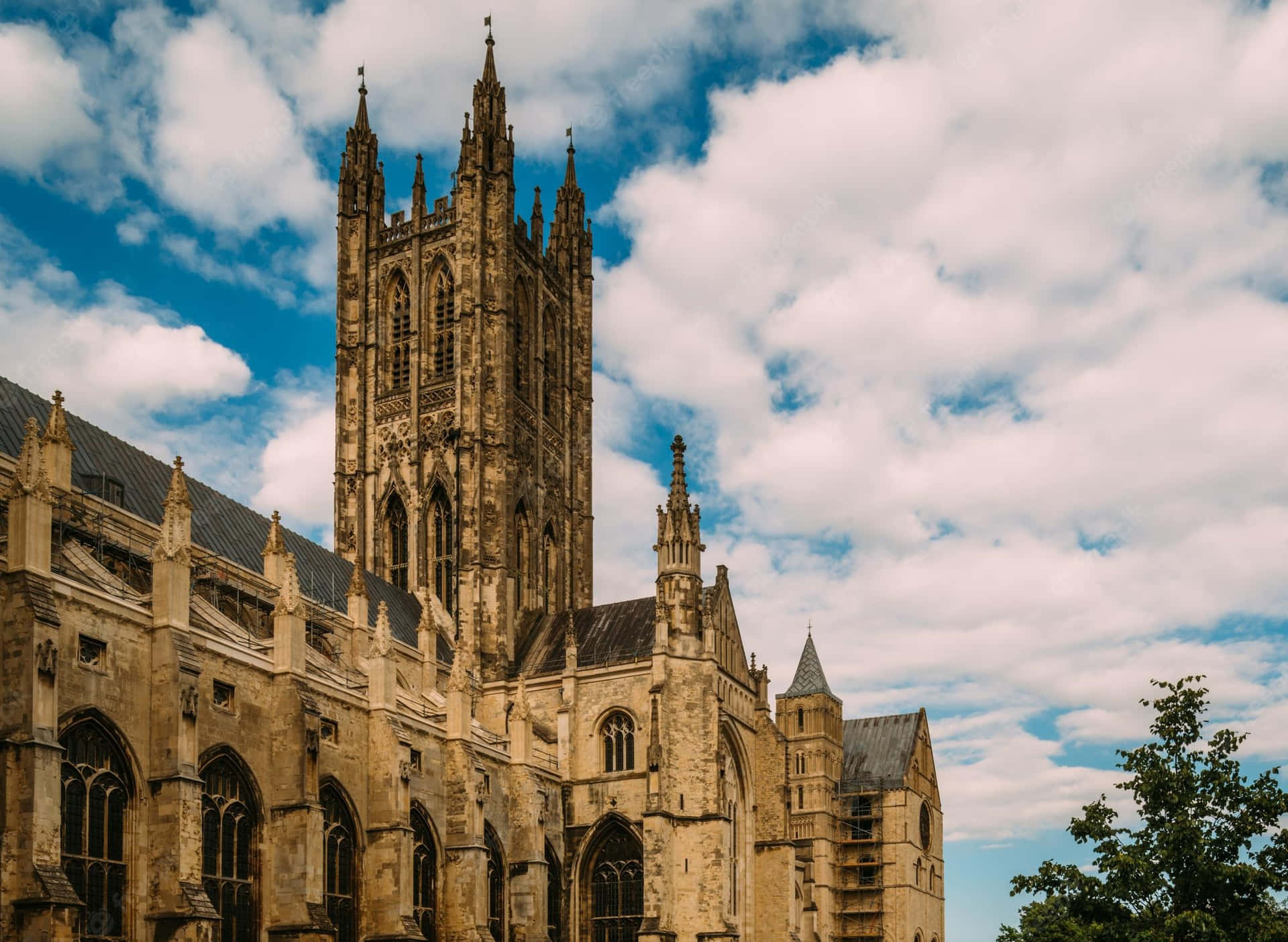
The Pilgrims’ Way winds through southeast England, from Winchester or London to Canterbury. It follows old Roman roads and meanders through orchards, hills, and villages that have seen pilgrims pass for centuries.
The destination, Canterbury Cathedral, became the scene of an event that would mark English history deeply. In the 12th century, Thomas Becket, Archbishop of Canterbury and former chancellor of King Henry II, clashed with the monarch over the boundaries between royal and ecclesiastical power. Once the king’s confidant, he ultimately sided with the Church and with his conscience.
In 1170, four knights, spurred on by a rash remark of the king, entered the cathedral and killed Becket at the altar. His death shocked Europe. Soon after, he was venerated as a martyr, and in 1173 Pope Alexander III canonized him. His tomb became one of the great pilgrimage sites of medieval England.
Today, walking to Canterbury means following not just a historical path, but also a moral one that of a man who remained true to his convictions, even unto death. The cathedral endures as a place of silence and remembrance, where faith and integrity meet.
Assisi – In the Footsteps of Saint Francis (Italy)
In the heart of Umbria lies Assisi, birthplace of Francis of Assisi (1181–1226), the son of a wealthy merchant who renounced his fortune to live in poverty. He chose simplicity, peace, and harmony with nature, finding in that humility a profound form of faith. His way of life and preaching led to the founding of the Franciscan Order, devoted to service and humility.
The Cammino di Francesco follows several routes, often from Florence or La Verna, through hills, olive groves, and medieval towns. The trail mirrors Francis’s own life: simple, natural, and full of attention to the small and the sacred.
In Assisi, he rests in the basilica that bears his name; a place where faith, silence, and beauty converge. For many, this pilgrimage is an invitation to step away from possessions and haste, and, like Francis, rediscover wonder in the everyday.

Mont-Saint-Michel – Where Heaven and Earth Meet (France)
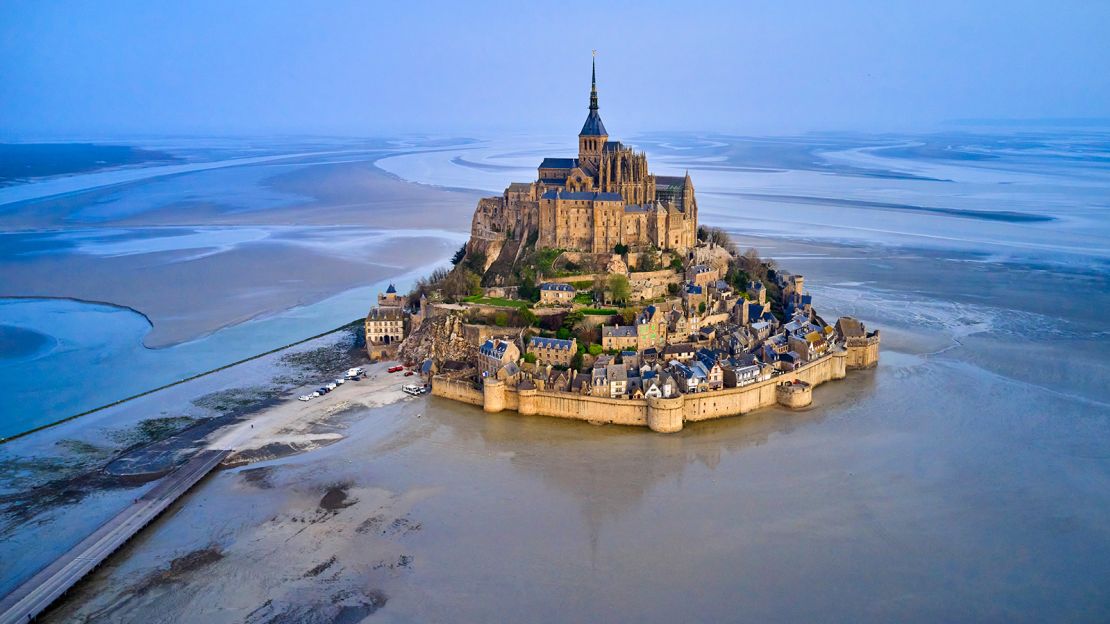
On the Norman coast, the Abbey of Mont-Saint-Michel rises from the sea; a site that has drawn pilgrims since the early Middle Ages. According to legend, in the year 708, the Archangel Michael appeared to Bishop Aubert of Avranches, commanding him to build a sanctuary upon the rocky islet. When the bishop hesitated, the angel pressed his finger to his head to strengthen his resolve — a legendary gesture still told with reverence today.
Michael, the warrior against evil and protector of the righteous, became a symbol of strength, vigilance, and divine protection. Around his sanctuary grew a vibrant pilgrimage tradition. Pilgrims crossed the dangerous tidal flats on foot, guided by the rhythm of ebb and flow, believing that the journey itself was an act of devotion.
Today, walking routes from Caen, Avranches, or Saint-Malo lead to the mount, which becomes an island at high tide. The abbey, with its spire reaching toward the sky, remains one of Europe’s most awe-inspiring spiritual sites, literally poised between water and air, where earth and heaven meet.
Ancient Paths
Europe’s pilgrimage routes are no modern invention but traces that have existed for over a thousand years. They arose in an age when travel was seldom casual: a journey to Santiago, Rome, or Trondheim meant weeks or months of hardship — but also of faith, penance, and hope.
Along these routes, abbeys, inns, and towns flourished. They brought cultures into contact and formed a network that bound Europe together long before borders or nations existed. Pilgrimage was an exercise in trust — in God, in fellow travelers, in the road itself.
Today, people walk those same paths again, each for their own reasons. The stones are the same, the landscapes have changed, yet the movement endures. What one finds along the way is for each to discover.